Showing posts with label Odessey and Oracle. Show all posts

Saturday, July 20, 2019

Odessey & Oracle vs. Sgt. Pepper’s Lonely Hearts Club Band

I was having dinner with folks from work awhile back, and we fell into a parlor game of sorts, taking turns asking questions of the table. Someone asked what would we select as the topic, were we given the task of making a documentary. One person said they’d do a film about immigration policy and another dinner participant announced a documentary about himself. My documentary topic choice was related to the hype I’d been reading, around that time, about the 50th anniversary of Sgt. Pepper’s Lonely Hearts Club Band by The Beatles. Specifically, my documentary would be about how The Zombies recorded a better album than The Beatles that year. Immediately, one participant texted her boyfriend to get a better opinion, and he immediately texted back: “It’s ridiculous to even suggest Rod Argent and Colin Blunstone were more talented than Lennon and McCartney, and of course Sgt. Pepper’s is superior; it’s one of the biggest-selling albums of all time!”

Okay, so first of all, I hadn’t suggested which musical partnership was “more talented,” (incidentally, Blunstone wasn’t a principle songwriter in the group, that would be Chris White, but that's just a pesky fact…) and if album sales equal “greatness,” then the following albums are “greater” than Sgt. Pepper’s:
  • The Bodyguard Soundtrack, by various artists 
  • Falling Into You, by Celine Dion
  • Music Box, by Mariah Carey
  • Oops! I did It Again, by Britney Spears
  • Backstreet’s Back, by Backstreet Boys
  • Spice, by Spice Girls
  • The Sign, by Ace of Base
To name just a handful. (But those aren't so much comparisons of quality than points on a graph...)

Sgt. Pepper's Lonely Hearts Club Band

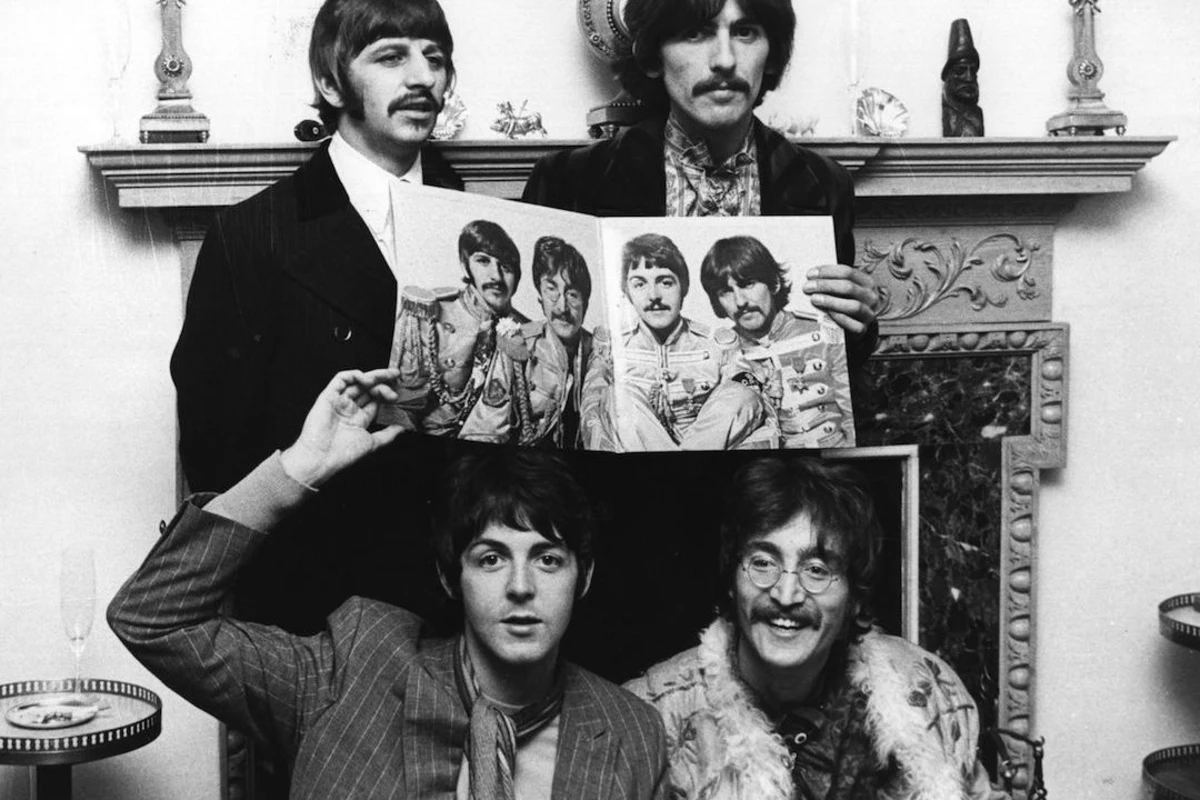
Image result for sgt pepper's recording session

Just over 50 years ago, The Beatles released a collection of songs many, including my colleague’s boyfriend, consider to be the greatest rock and roll album of all time, Sgt. Pepper’s Lonely Hearts Club Band. When it was released, it was arguably the most anticipated album up to that time. With its iconic, hot-mess of a cover photograph and almost actual-sized gatefold photo in eye-popping fluorescent colors, it turned the pop culture world upside down. Langdon Winner recalls, “The closest Western Civilization has come to unity, since the Congress of Vienna, in 1815, was the week the Sgt. Pepper album was released.

Related image
Beatles Sgt. Pepper's Recording Session, Abbey Road Studios
In every city in Europe and America the radio stations played [it] ... and everyone listened.” American radio stations interrupted their regular scheduling, playing the album virtually non-stop – often from start to finish. It occupied the number one position of the Billboard Top albums in the US for 15 weeks. Hippie cults even started looking for hidden messages in the lyrics and by playing the album backwards. In fact, the trend-chasing Rolling Stone magazine lists the album at #1 on their list of Top 500 Albums of All-Time. And by the way, it happens to be a decent album, but it’s definitely not the best Beatles album (let alone the “best album of all time”), and I’m positing, here, that one, relatively obscure (at the time...) album recorded in the same Abbey Road studio just weeks after the Fab Four left the building is head and shoulders better. That album, Odessey and Oracle, by The Zombies, turned 50 years-old last year.

Image result for zombies odessey and oracle recording sessions
Zombies Odessey & Oracle recording session, Abbey Road Studios
Odessey and Oracle was the last-gasp effort of a band widely known as a singles band, with their two, early singles going US Top 10 in 1964 (“She’s Not There,” #2 and “Tell Her No,” #6). For the next two years, the band struggled to sustain their initial chart success in the States, and their exceptional, underrated singles (“Leave Me Be,” “She’s Coming Home,” “Whenever You’re Ready,” “Is This The Dream,” etc.) failed to find a foothold on the radio. In the summer of 1967, the band made a one album, make-or-break deal with CBS Records. The budget was shoestring, so the band had no time for studio experimentation, bringing their tightly-rehearsed tunes into the studio. Serendipitously, the band was able to book time at Abbey Road Studio and followed The Lads into the studio, playing on some of the same instruments left behind by George, Paul, John, and Ringo and fueled by the extraordinary songs written by the band’s principle songwriters, Rod Argent and Chris White.

Image result for zombies odessey and oracle recording sessions

My full review of Odessey is here, so I’ll spend the rest of this column taking pot-shots at the mediocre Sgt. Pepper’s. It might be helpful to point out, here, that I’m not the only person to suggest that Sgt. Pepper’s isn’t worthy of its hype: it was voted the “Worst Record Ever Made” in a 1998 Melody Maker poll of pop stars, DJs, and journalists. Guardian critic, Richard Smith, wrote, "if not the worst, then certainly the most overrated album of all time." He also said that the "excruciating" LP was often ranked by members of the music press as the best ever due to affection for its pop cultural impact, and "not because of anything intrinsically great about the record." In 2015, Rolling Stones guitarist, Keith Richards, denounced the album as "a mishmash of rubbish, kind of like Satanic Majesties." In a 2005 BBC listener poll to determine the "Most Overrated Album in the World," Sgt. Pepper's placed at no. 7.

The Good Songs on Sgt. Pepper’s:
  1. Sgt. Pepper’s Lonely Hearts Club Band: Paul McCartney’s the champ on this album, turning in the best songs, including this title track, which introduces the concept of the album: an alter-ego band in concert. 
  2. Getting Better: Lightness and darkness frame this call-and-response song, with McCartney bringing the light and Lennon displaying his omnipresent violence (“I used to be cruel to my woman, I beat her and kept her apart from the things that she loved”). Paul’s always been my favorite Beatle, by the way. 
  3. Fixing a Hole: This contemplative McCartney tune has purportedly been about addressing pain and unresolved issues in one’s life, about obsessive and relentless fans, and/or about cannabis. 
  4. She’s Leaving Home: McCartney and Lennon co-wrote this song based upon a newspaper story about a girl who mysteriously left home and her parent’s resulting resentment and indignation.
  5. Good Morning Good Morning: I always thought this song sounded like a children’s breakfast cereal commercial, and it turns out, Lennon was inspired to write this song by a Kellogg’s Cornflakes commercial. And also by Pet Sounds. 
  6. A Day in the Life: Lennon and McCartney co-wrote the best song on the album, highly influenced by “Good Vibrations” and LSD. 
The Mediocre Songs on Sgt. Pepper’s:
  1. With a Little Help from My Friends: Joe Cocker covered this song, elevating a trifle album cut into one of the greatest rock-and-roll songs of all time. But on this album, it was a throwaway novelty. 
  2. When I’m Sixty-Four: Cute song; it’s a throwaway novelty. 
  3. Lovely Rita: Throwaway. 
The Shitty Songs on Sgt. Pepper’s:
  1. Lucy in the Sky with Diamonds: The most interesting thing about this song was the debate about whether it was about LSD, or was it a reference to young Julien’s artwork from school? Who cares? It’s an awful song. 
  2. Within You Without You: A muddy, psychedelic mess. It’s stressful just listening to it. I hate it. 
  3. Being for the Benefit of Mr. Kite: Like Harrison’s, “Within You, Without You,” this menacing track about a 19th-century circus poster is stressful to the ear. 
Friends, it’s simple math: Sgt. Peppers had 6 good songs on an album with 12 tracks. On the 12-track Odessey, every track is exceptional.

Zombies Odessey & Oracle recording session, Abbey Road Studios
And if you’re still not convinced, consider this: the Beatles were inducted into the Rock-and-Roll Hall of Fame as a result of their behemoth catalogue 13 studio albums and over 60 singles spanning 4 decades. Their output and massive success was staggering and will likely never be matched. The Zombies, conversely, were included in this elite rock-and-roll club on the strength of just 2 early hit singles and this perfect album.

Related image

Saturday, January 3, 2009

"Odessey and Oracle," by The Zombies


Almost everybody who knows this album by the Zombies found it through its 1969 hit single, “Time of the Season.” The lyrics are way over the top: “What’s your name? Who’s your daddy? Is he rich like me?” Who talks like that? Not exactly “sweep a girl off her feet” kind of talk, right? I suspect the lyrics were meant to reflect the 1967 “Summer of Love” mindset: strangers meet, strangers exchange love beads, strangers expand their minds, etc. I’m just speculating; I wasn’t there. But the ridiculous lyric has not kept me from loving these 3 minutes and 33 seconds of pure pop perfection.


The song was written by keyboardist, Rod Argent, who later went on to further success in the 1970’s with his band, “Argent,” and also went on to continued success in the 1980’s behind-the-scenes as a producer (Tanita Tikiram’s “Ancient Heart” – see entry forthcoming). “Time of the Season” reached #3 on Billboards singles chart in 1969 – over a year after the album had been released and the band had called it quits. I first remember hearing the record on the radio around the time I was starting grade school in 1976. I found it kind of spooky, starting with Colin Blunstone’s mysterious, whispery, almost raspy vocals. Over the years I became a fan of Blunstone via the other Zombies’ hits from the 1960’s, “Tell Her No,” “She’s Not There,” and also “Old and Wise,” from the Alan Parsons Project’s 1983 album, “Eye In The Sky,” although I didn’t make the connection that it was Blunstone until years later.


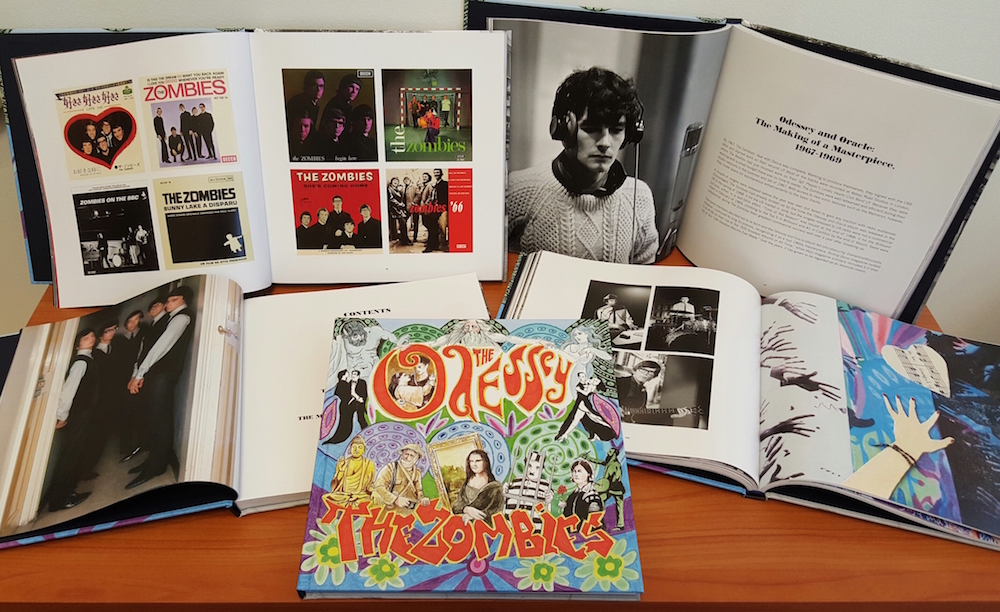
Fast-forward to 1987. I was in high school with some discretionary funds and found myself in the record store, looking for Zombies albums. To my good fortune, I found one solitary copy of “Odessey & Oracle” at a small record store near my hometown. The album cover struck me first. Did they intend to misspell "Odyssey?" The artwork seemed so rebellious and dangerous, full of strange, swirly, psychedelic shapes, insane octopus tentacles, and disturbing images of human monsters, mythological creatures, and a figure of a man crying out loud in utter despair. These pieces were mixed with softer imagery of an artist painting, flower pedals, lovers touching and dancing, and some good old-fashioned nudity. Oh, and the first names of the band members were snuck-in as well. It’s essentially everything one might look for in a rock-n-roll album cover, and I was immediately taken by it; I still am. Today, in fact, my copy of the album artwork is framed and hangs in my office, immediately above a Beatles concert poster.


As for the music, there is literally not a weak song on this baroque-meets-psychedelia record, with a possible exception being “Butcher’s Tale (Western Front 1914),” an anti-war story set in World War 1 with surprisingly graphic imagery depicting the utter horror of war. It’s not a “weak song,” per se, it’s just difficult to listen to and the only one I occasionally skip.

“Care of Cell 44” is a contradictorily cheerful song about a man preparing for the return of his girlfriend a long time away…in prison. It’s possibly the most covered song from the album, most recently by Susanna Hoffs (The Bangles) and Matthew Sweet.


“Maybe After He’s Gone” begins with a solitary, echoey guitar and volleys between that and a joyous crescendo of romping piano and shouting Beach Boys-esque chorus. It’s a sad song about romantic rejection of the worst kind: she found a cooler guy. The band creates in this mini masterpiece, this "teenage symphony to God" another polarizing juxtaposition of words and sounds, a song about a horrible breakup with a rapturous chorus and musical accompaniment.

“A Rose for Emily” is an allusion to William Faulkner’s short story of the same name. It has a haunting and powerful melody to go along with the heartbreaking lyrics. In one of those late night college chill sessions back in the early 90’s, I witnessed, in fact, the song bring tears to a friend of mine.

The album as a whole is rife with some of the most beautiful vocal harmonies I’ve ever heard. Chris Martin and Thom Yorke were no doubt influenced by Blunstone’s voice and the band’s soaring harmonies. Thematically, the album is all over the place: life and death, love and war, joy and despair, cynicism and optimism, friends and family…kind of like life. Which is ultimately why I love this album so much and why I keep going back to it – I never get tired of it. “Odessey and Oracle,” imperfect spelling and all, sings about what it feels like to be alive.