Showing posts with label The Beatles. Show all posts

Saturday, July 20, 2019

Odessey & Oracle vs. Sgt. Pepper’s Lonely Hearts Club Band

I was having dinner with folks from work awhile back, and we fell into a parlor game of sorts, taking turns asking questions of the table. Someone asked what would we select as the topic, were we given the task of making a documentary. One person said they’d do a film about immigration policy and another dinner participant announced a documentary about himself. My documentary topic choice was related to the hype I’d been reading, around that time, about the 50th anniversary of Sgt. Pepper’s Lonely Hearts Club Band by The Beatles. Specifically, my documentary would be about how The Zombies recorded a better album than The Beatles that year. Immediately, one participant texted her boyfriend to get a better opinion, and he immediately texted back: “It’s ridiculous to even suggest Rod Argent and Colin Blunstone were more talented than Lennon and McCartney, and of course Sgt. Pepper’s is superior; it’s one of the biggest-selling albums of all time!”

Okay, so first of all, I hadn’t suggested which musical partnership was “more talented,” (incidentally, Blunstone wasn’t a principle songwriter in the group, that would be Chris White, but that's just a pesky fact…) and if album sales equal “greatness,” then the following albums are “greater” than Sgt. Pepper’s:
  • The Bodyguard Soundtrack, by various artists 
  • Falling Into You, by Celine Dion
  • Music Box, by Mariah Carey
  • Oops! I did It Again, by Britney Spears
  • Backstreet’s Back, by Backstreet Boys
  • Spice, by Spice Girls
  • The Sign, by Ace of Base
To name just a handful. (But those aren't so much comparisons of quality than points on a graph...)

Sgt. Pepper's Lonely Hearts Club Band

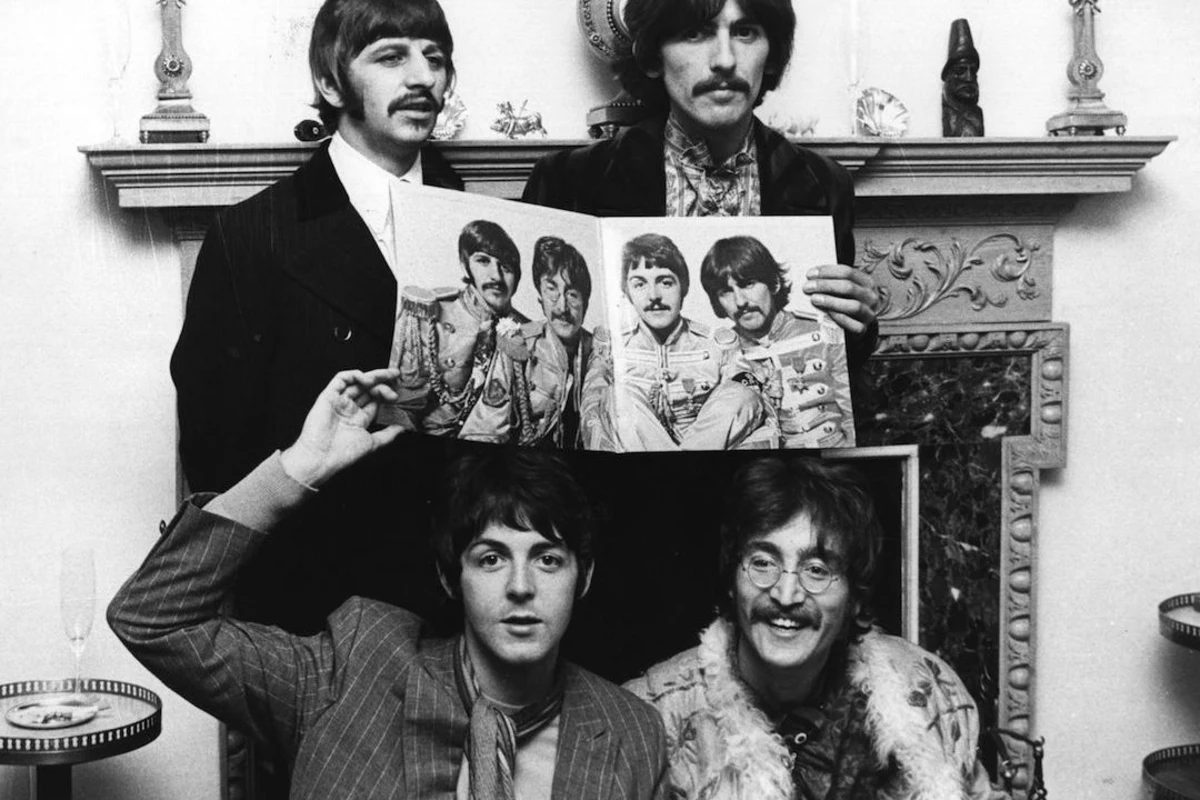
Image result for sgt pepper's recording session

Just over 50 years ago, The Beatles released a collection of songs many, including my colleague’s boyfriend, consider to be the greatest rock and roll album of all time, Sgt. Pepper’s Lonely Hearts Club Band. When it was released, it was arguably the most anticipated album up to that time. With its iconic, hot-mess of a cover photograph and almost actual-sized gatefold photo in eye-popping fluorescent colors, it turned the pop culture world upside down. Langdon Winner recalls, “The closest Western Civilization has come to unity, since the Congress of Vienna, in 1815, was the week the Sgt. Pepper album was released.

Related image
Beatles Sgt. Pepper's Recording Session, Abbey Road Studios
In every city in Europe and America the radio stations played [it] ... and everyone listened.” American radio stations interrupted their regular scheduling, playing the album virtually non-stop – often from start to finish. It occupied the number one position of the Billboard Top albums in the US for 15 weeks. Hippie cults even started looking for hidden messages in the lyrics and by playing the album backwards. In fact, the trend-chasing Rolling Stone magazine lists the album at #1 on their list of Top 500 Albums of All-Time. And by the way, it happens to be a decent album, but it’s definitely not the best Beatles album (let alone the “best album of all time”), and I’m positing, here, that one, relatively obscure (at the time...) album recorded in the same Abbey Road studio just weeks after the Fab Four left the building is head and shoulders better. That album, Odessey and Oracle, by The Zombies, turned 50 years-old last year.

Image result for zombies odessey and oracle recording sessions
Zombies Odessey & Oracle recording session, Abbey Road Studios
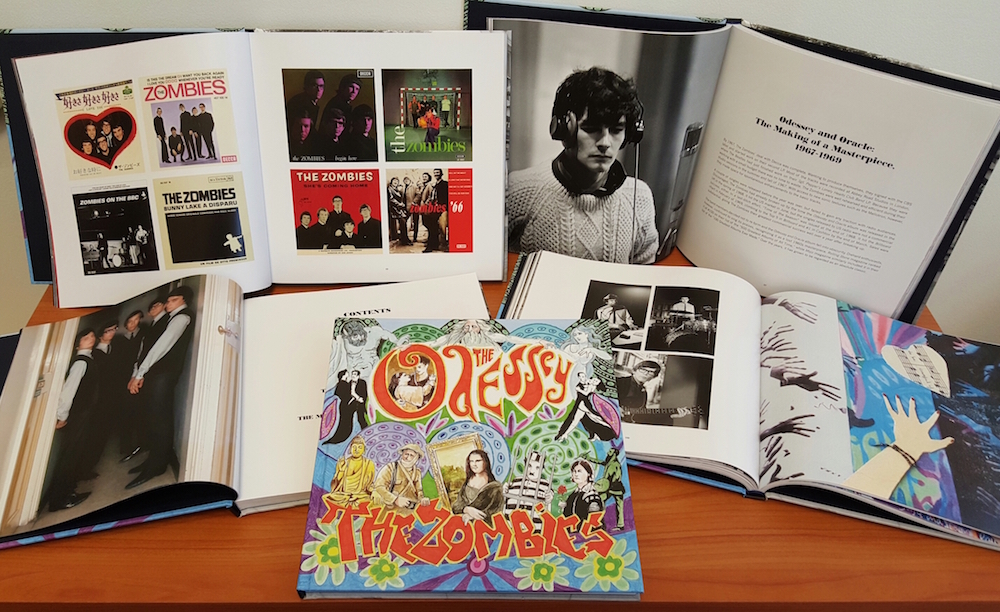
Odessey and Oracle was the last-gasp effort of a band widely known as a singles band, with their two, early singles going US Top 10 in 1964 (“She’s Not There,” #2 and “Tell Her No,” #6). For the next two years, the band struggled to sustain their initial chart success in the States, and their exceptional, underrated singles (“Leave Me Be,” “She’s Coming Home,” “Whenever You’re Ready,” “Is This The Dream,” etc.) failed to find a foothold on the radio. In the summer of 1967, the band made a one album, make-or-break deal with CBS Records. The budget was shoestring, so the band had no time for studio experimentation, bringing their tightly-rehearsed tunes into the studio. Serendipitously, the band was able to book time at Abbey Road Studio and followed The Lads into the studio, playing on some of the same instruments left behind by George, Paul, John, and Ringo and fueled by the extraordinary songs written by the band’s principle songwriters, Rod Argent and Chris White.

Image result for zombies odessey and oracle recording sessions

My full review of Odessey is here, so I’ll spend the rest of this column taking pot-shots at the mediocre Sgt. Pepper’s. It might be helpful to point out, here, that I’m not the only person to suggest that Sgt. Pepper’s isn’t worthy of its hype: it was voted the “Worst Record Ever Made” in a 1998 Melody Maker poll of pop stars, DJs, and journalists. Guardian critic, Richard Smith, wrote, "if not the worst, then certainly the most overrated album of all time." He also said that the "excruciating" LP was often ranked by members of the music press as the best ever due to affection for its pop cultural impact, and "not because of anything intrinsically great about the record." In 2015, Rolling Stones guitarist, Keith Richards, denounced the album as "a mishmash of rubbish, kind of like Satanic Majesties." In a 2005 BBC listener poll to determine the "Most Overrated Album in the World," Sgt. Pepper's placed at no. 7.

The Good Songs on Sgt. Pepper’s:
  1. Sgt. Pepper’s Lonely Hearts Club Band: Paul McCartney’s the champ on this album, turning in the best songs, including this title track, which introduces the concept of the album: an alter-ego band in concert. 
  2. Getting Better: Lightness and darkness frame this call-and-response song, with McCartney bringing the light and Lennon displaying his omnipresent violence (“I used to be cruel to my woman, I beat her and kept her apart from the things that she loved”). Paul’s always been my favorite Beatle, by the way. 
  3. Fixing a Hole: This contemplative McCartney tune has purportedly been about addressing pain and unresolved issues in one’s life, about obsessive and relentless fans, and/or about cannabis. 
  4. She’s Leaving Home: McCartney and Lennon co-wrote this song based upon a newspaper story about a girl who mysteriously left home and her parent’s resulting resentment and indignation.
  5. Good Morning Good Morning: I always thought this song sounded like a children’s breakfast cereal commercial, and it turns out, Lennon was inspired to write this song by a Kellogg’s Cornflakes commercial. And also by Pet Sounds. 
  6. A Day in the Life: Lennon and McCartney co-wrote the best song on the album, highly influenced by “Good Vibrations” and LSD. 
The Mediocre Songs on Sgt. Pepper’s:
  1. With a Little Help from My Friends: Joe Cocker covered this song, elevating a trifle album cut into one of the greatest rock-and-roll songs of all time. But on this album, it was a throwaway novelty. 
  2. When I’m Sixty-Four: Cute song; it’s a throwaway novelty. 
  3. Lovely Rita: Throwaway. 
The Shitty Songs on Sgt. Pepper’s:
  1. Lucy in the Sky with Diamonds: The most interesting thing about this song was the debate about whether it was about LSD, or was it a reference to young Julien’s artwork from school? Who cares? It’s an awful song. 
  2. Within You Without You: A muddy, psychedelic mess. It’s stressful just listening to it. I hate it. 
  3. Being for the Benefit of Mr. Kite: Like Harrison’s, “Within You, Without You,” this menacing track about a 19th-century circus poster is stressful to the ear. 
Friends, it’s simple math: Sgt. Peppers had 6 good songs on an album with 12 tracks. On the 12-track Odessey, every track is exceptional.

Zombies Odessey & Oracle recording session, Abbey Road Studios
And if you’re still not convinced, consider this: the Beatles were inducted into the Rock-and-Roll Hall of Fame as a result of their behemoth catalogue 13 studio albums and over 60 singles spanning 4 decades. Their output and massive success was staggering and will likely never be matched. The Zombies, conversely, were included in this elite rock-and-roll club on the strength of just 2 early hit singles and this perfect album.

Related image

Thursday, December 20, 2012

"The Seeds Of Love," by Tears For Fears


A few years ago I read an interview with a “hot” young musician, who subsequently faded away (forgive my feeble memory; I don’t remember his name; it’s on the tip of my tongue…), who was backhandedly complimenting Tears for Fears during their commercial heyday, citing their classic pop hits, like “Everybody Wants To Rule The World,” “Shout,” and “Sowing The Seeds Of Love,” as “wonderful, but dated, forever stuck in 1980’s synthesizers.” I have to disagree. I liken describing Tears for Fears’ music as “stuck in the 1980’s,” to saying David Bowie’s music is stuck in the 1970’s. Is it a product of its cultural and musical timeframe? Certainly, but isn’t that precisely from where it derives its artistic power and musical strength? Isn’t that the job of pop music, to reflect the mores and zeitgeist of the moment in 3-minute verse-chorus-verse format?

But hype is fascinating like that. Don’t believe me? Watch your facebook newsfeed evolve after a national event; it serpentines, with facebook friends jumping on the bandwagon of the thought-o-the-moment with cattle stampede-like trajectories of opinion. And so it goes with the music industry that hypes “the next big thing,” only to turn 180 degrees months, weeks, days later when it appears the trend is going in a different direction. Popular music is riddled with artists who should have been the “second coming,” only to fall short when trends shift. To wit, in the 1970’s, insiders speculated that The Knack was, secretly, the re-formed Beatles (sigh…if only), in the 1980’s, Terence Trent D’Arby was supposed to be the second coming of James Brown (sadly, not), and in the 1990’s, Sophie B. Hawkins was supposed to alter the direction of popular music (that said, I still enjoy her eccentric, sadly underappreciated music). And after their 15 minutes of fame were spent, these artists faded into their respective obscurities.

Such was the case with Tears for Fears much touted third release, The Seeds Of Love. Buoyed by the accumulated success of their previous two albums, the critically acclaimed, but slow-burning (in the U.S.) debut, The Hurting, and the world-wide, multi-platinum smash of Songs From The Big Chair, Roland Orzabal and Curt Smith were poised for musical world domination with their highly and long-anticipated follow-up, The Seeds Of Love. Indeed, arriving four years after its predecessor, The Seeds Of Love was to be the next big thing. How could it not be that? The first single, “Sowing The Seeds Of Love,” with it’s Beatles-influenced backdrop and inventive, accompanying video, rocketed to #2 on the Billboard chart and worked the awaiting, record-buying public into a frenzied froth (as a good lead-off single should). So much so, that in its November 1989 album review, the trend-conscious Rolling Stone magazine gave the album an almost perfect review: four out of five stars, reviewer Michael Azerrad stated, “…it's exciting that such thought-provoking music will undoubtedly be so widely heard. If with the title track Tears for Fears beg comparison to the Beatles, it's in the unspoken assertion that popular music can also be outstanding music. That's something this remarkable record proves over and over again.” 

Well said, Mr. Azerrad, well said. But just one year later in its year-end issue, the same publication trashed the album, calling the songs meandering and “overlong.” So which is it, Rolling Stone? What changed about the album in 10 months? Was it good or not? Apparently not, or maybe something else was afoot. After all, the subsequent singles from the album faired far less than the leadoff single (hard to imagine a feminist anthem competing strongly against the featherweight pop of Wilson Phillips, Michael Bolton, and Milli Vanilli). MTV, pop radio, and the record-buying public couldn’t be wrong about this one…right?

Whichever way you look at it, I’m inclined to agree with Azerrad’s original opine: The Seeds Of Love is a remarkable piece of work, likely the duo’s best effort, and worthy of another listen (or two or three…). Featuring only eight songs, side one became the “singles” side, featuring three of the most well-known singles from the album, the grandiose, everything-but-the-kitchen-sink #2 smash, “Sowing The Seeds Of Love,” the sensitive-man-as-feminist duet with (the stunning) Oletta Adams, “Woman In Chains,” and the playful, sunshine pop confection, “Advice For The Young At Heart,” with the borrowed John Lennon line, “Love is a promise, love is a souvenir; once given, never forgotten, never let it disappear…” The final song on the album, “Famous Last Words,” while one of my favorite tracks, was released as the album’s last single but disappeared without a trace as the album, by that time, had been widely forgotten by all parties concerned.

While references to The Beatles are undeniable (even down to the Sgt Pepper’s-like collage of an album cover), I liken The Seeds Of Love less to any, one Beatles album than I would compare it to Pink Floyd’s perennial classic, Dark Side of The Moon, with its swirling jazz riffs, melancholy atmospherics, sweeping soundscapes, and soulful, tortured vocals by Oletta Adams, who went on to a highly successful career as a soul singer after being launched by this album. Indeed, the tracks on Seeds Of Love, like the tracks on Dark Side Of The Moon, are longer than the standard pop song, clocking-in at an average of over 6 minutes, but Orzabal seemed to be going more for Alan Parsons style epics than catchy 3 minute pop petit fours. Viewing his entire catalogue, I’ve come to believe that Roland Orzabal can’t not write a song without a tangible melody, and Seeds Of Love is no exception. That said, the album is scarce on pop hooks, per se, but the album seems crafted to build a significantly more satisfying musical experience over time, with repeated listens, much like Dark Side Of The Moon’s epic journey, except instead of a musical case study in madness, Seeds Of Love examines a road map of the human heart. We seem to still need that...