Showing posts with label Rolling Stone. Show all posts

Sunday, August 18, 2013

“Taming The Tiger,” by Joni Mitchell


Musically, Joni Mitchell’s 1998 album, Taming The Tiger, feels ethereal and dreamy, almost formless. Reminiscent of classic albums by Pat Metheny, Brian Eno, or even Beck’s heartbreaking, 2002 album, Sea Change. Ditching catchy pop hooks and melodies for atmospherics, on Taming The Tiger, Mitchell weaves a dramatic, often mournful, and sometimes mysterious sonic tapestry. The “samey” tone of the album might make one prematurely dismissive, but that would be a mistake, as Taming The Tiger holds some of Mitchell’s most creative lyrics and striking social commentary. And the similar, sorrowful hues of the album make sense: Tiger tells the story of Joni Mitchell at that particular moment in her life: a woman in her middle age, at the top of her craft - easily producing masterworks on a backstroke, reflecting on her wondrous experiences, reveling in the joys of the present, continuing her thoughtful critique of a civilization in decline, and ultimately, strangely, miraculously feeling peaceful about the entire enterprise.

In the joyous album opener, “Harlem In Havana,” Mitchell depicts a childhood memory of visiting the African-Cuban burlesque review that some suggest to be the beginning of rock-and-roll. Mitchell’s lyrics describe the “forbidden" sights and sounds on the midway, where they played so “snakey,” you couldn’t help how you felt: “Silver spangles, See 'em dangle in the farm boy's eyes...hootchie kootchie, Auntie Ruthie would've died if she knew we were on the inside!” In “Love Puts On A New Face,” Mitchell perfectly depicts the tranquility of a quiet moment with a loved one, “No telephone ringing, no company coming, just the lap of the lake and the firelight, and the lonely loon and the crescent moon, what a pocket of heavenly grace.” Indeed. And in “The Crazy Cries Of Love,” Mitchell joyously recounts two frenzied lovers losing themselves to reckless abandon, with “No paper thin walls, no folks above, no one else can hear the crazy cries of love,” and later in the café, “…they smile ear to ear and eye to eye, ice cream is melting on a piece of pie, oh, my my…” Playful. Truthful. Tender.

Mitchell summons English poet and painter William Blake (her kindred spirit and consistent source of inspiration) in the title track, an apt summation of the music industry in the mid-1990s, as personified, no doubt, by her victorious night at the Grammys a few years earlier, collecting a surprise trophy for “Best Pop Album.” The surprise being that the album, Turbulent Indigo, sold relatively few copies that year, and none of the teenagers buying records in 1994 could have hummed even one of its tunes. Inspired by lyrics from Blake’s poem, “The Tyger,” I’ve often wondered if the song describes her experience at the award ceremony that night as she must have, no doubt, reflected upon how her latest “golden egg” compared to the music of that moment (e.g., Ace Of Base, Coolio, Crash Test Dummies, etc.): a strange juxtaposition.

Another song, I suspect, about her experiences in the dog-eat-dog music industry, “Lead Balloon,” is probably her hardest rocking song, ever. It sounds eerily similar to the well-known story of Mitchell throwing her drink into the face of Rolling Stone Svengali, Jan Wenner, in the early 1970’s, sparking a grudge between the two that lasts to this day. The notorious incident incited what some have suggested a moratorium on all things "Joni Mitchell" in his popular magazine in the 1970’s. In fact, the publication routinely berated Mitchell’s late 1970’s masterworks, which were vindicated over time and are now widely regarded as some of her very best and enduring albums (incidentally, recent Rolling Stone publications have self-consciously corrected these scathing notices).

Taming The Tiger boasts some of Mitchell’s most tender poetry, including a remake of her heartbreaking “Man From Mars,” which was originally featured on a few thousand copies of the soundtrack to the obscure 1996 film, Grace Of My Heart, which borrowed its name from Mitchell's song and presented a fictionalized version of Carole King’s early career in pop music. In it, Mitchell sings about a lost love: “I fall apart every time I think of you swallowed by the dark. There is no center to my life now, no grace in my heart. Man from Mars: this time you went too far…” The version on Tiger is updated and of a piece with the sonic palette of the rest of the album. In the tender cajoling of “Facelift,” Mitchell affectionately recalls an argument with her mother, who disapproved of her “love without a license,” and in “Stay In Touch,” Mitchell describes the excitement, doubt, and hopeful tentativeness of navigating a burgeoning relationship with her (then) new-found daughter, whom she’d given up for adoption decades earlier: “Part of this is permanent, part of this is passing, so we must be loyal and wary
 - not to give away too much, until we build a firm foundation and empty out old habits:
 old habits. Stay in touch. We should stay in touch.”

Mitchell’s sooty vocals have been the brunt of harsh criticism since the early 1990’s, with one reviewer writing of this album, “Meanwhile, her voice has lost nearly all its power: thin and breathy, restricted to the middle of her former range - I wanted to cry listening to it.” Yes, Mitchell’s voice has changed over time, as have all singers still active after many decades, but I believe this is only problematic for artists known for a distinct vocal style or range. Mitchell has never been that kind of artist. Take Whitney Houston, for example. In the 1980’s, her voice could thrill with a whisper and then soar to unfathomable heights, but by the last decade of her tragic life, her once astounding instrument sounded raspy and lacked power, as if fighting back a coughing fit on every note. Mitchell’s voice has been evolving since her earliest, cold-water vocals from the Canyon, her sultrier, jazzy singing through the 1970’s, and her beautifully smoky-voiced style of the 1980’s and 1990’s.

What I love about Mitchell’s voice today is that it’s perfectly attuned to her music and lyrics in the present. She’s no longer the flower-beaded ingénue of the 1960’s or the 1970’s darling of the Hollywood elite. She’s not only survived, but she’s thrived through decades of disposable fashion and pop music trends, creating a classification all her own. In fact, Mitchell’s seasoned voice is now even better suited for some of her classic songs from decades past (e.g., “Circle Game,” “Both Sides Now,” “Big Yellow Taxi,” etc.). Taming The Tiger received middling to favorable reviews upon release, but all rather tepid from my perspective. That was 15 years ago, and the musical climate was steeped in the “juvenile junk food” of Spice Girls, ‘N Sync, Backstreet Boys, and even rock legend, Elton John’s awkwardly reworked (yet again) “Candle In The Wind,” performed at Princess Diana’s funeral and selling millions of copies along the way. It’s 2013, and like her late-1970’s work, I suspect Taming The Tiger will no doubt be vindicated with time, standing out as one of Mitchell's very best works.

Sunday, June 16, 2013

“Carole King: Music,” by Carole King


In January of 1971, Carole King and a group of her friends recorded an album at A&M Records that defined an era. Tapestry was a classic-filled monster, holding the #1 position on Billboard’s album charts for four months that summer and launching King as a superstar. Up to that point, Carole King had been most known as a writer of pop hits (e.g., “Will You Love Me Tomorrow?” “(You Make Me Feel Like A) Natural Woman,” “Up On A Roof,” “The Loco-motion,” etc.), but Tapestry signaled the musician as one of the most reliable singles artists of the coming decade. Indeed, while her albums made less and less impact as the decade wore on (exceptions: Really Rosie, in 1975, and Pearls: Songs of Goffin and King, in 1980), King delivered some of the best, 1970’s radio-ready ear-candy, including such staples as, “Been To Canaan,” “Nightingale,” “Jazzman,” “Only Love Is Real,” and “Hard Rock Café,” helping us to navigate that tumultuous, stone washed decade.

Later that same year, King and friends returned to the studio, amidst the avalanche of promotion and performances that followed the massive success of Tapestry, and they crafted the magnificent and sadly underappreciated, Carole King: Music. Now, here’s the thing: rock writers always make one of three observations about any follow-up to a blockbuster album: 1.) “Ugh, it’s a mechanical, cash-in rewrite of their last album,” 2.) “Ugh, it’s an artist trying too hard to be fresh; they should have stuck with what they do best, you know, like on their last album,” 3.) “Sigh, the new album’s okay, but doesn’t quite possess the “magic” of their earlier work, you know, like on the last album.” Responding to Music, critics o’ the moment took all three positions: Robert Christgau called Music “mechanical,” and Rolling Stone suggested King had strayed too far from the Tapestry formula and that Music “…doesn't have its predecessor's sure, unified sense of style.” Sigh. “...Sometimes you win, sometimes you lose…”

I’d argue, however, that Music stands not only as one of King’s very best albums, ever, but constitutes an album of songs that any artist of that time (or of this time!) would have killed for.  In fact, two of the songs were recorded and made hits by other artists, including Karen and Richard Carpenter, who took “It’s Going To Take Some Time” to #12 in the spring of 1972. Ironically, that Music arrived in the wake of the Tapestry behemoth both ensured its success (it reached #1 just a few, short weeks after its December, 1971 release) and sealed its fate as the “oh, that was the so-so next album...” In fact, all of King’s subsequent (and consistently solid) work, post-Tapestry, faced the same, unfair comparison. No matter, though, as King has certainly received her due, with numerous Grammy awards, gold/platinum albums, hit songs, induction into the Rock-and-Roll Hall of Fame, and this May, King was the first woman recipient of the Library of Congress “Gershwin Prize” for popular song. Well done, Library of Congress, well done.

Music opens with the engrossing, “Brother, Brother,” written just months on the heels of Marvin Gaye’s classic single, “What’s Going On,” also with the phrase, “Brother, brother…” Was it an echo of Gaye’s lyric, as Rolling Stone suggested? A response to Gaye’s anthemic statement? Or was it more personal for King, whose own brother lived with disability? It works beautifully, either way, and remains a fan favorite, as well as one of many shoulda-been-a-hit-single songs off the album. Other songs that could have been big hits in 1972 include: “Surely,” which is an voluptuary slice of blue-eyed soul that could have been a big hit for King or for any number of R&B artists from the era (e.g., Al Green, Aretha Franklin, Dusty Springfield, Diana Ross, etc.), the sweet, James Taylor harmonied, “Song Of Long Ago,” and the vibrant, catchy-as-hell, “Brighter.”

All would have faired more than well amongst the trifle hit songs of 1972: “Alone Again (Natrually)” (Ugh. Because you deserve to be), “Candy Man” (Um, creepy much?), “Brand New Key” (Maybe, brand new...NO!), and “Baby, Baby Don’t Get Hooked On Me” (Don’t worry, I won’t. Seriously...). And speaking of singles, King’s label at the time, Ode, oddly released only one single from Music, the wonderfully sunny, “Sweet Seasons,” which reached #9 in the spring of 1972. Interesting side note: the B-side of the “Sweet Seasons” single is a lost gem, “Pocket Money,” from the long-forgotten 1972 film of the same name, starring Paul Newman and Lee Marvin: a great, unheard song, but widely available today on various CD and digital formats and one that I include as a “bonus” track for this superb album, as it was likely recorded during the Music sessions and nicely fits the overall tone of the album.

Other key album cuts include King’s version of her own song, “Some Kind Of Wonderful,” which is a slowed down iteration of The Drifters’ magnificent hit song from 1961. What I love about King’s version is how intimate the lyrics become with her tender reading. “Carry Your Load” contains a solicitous lyric about the support and kindness of an old friend. I think about this song most when I think about Kristina and Simon. And of course, there’s the title track, “Music,” that’s lyrics testify to the uplifting power of music, and more specifically, the sheer pleasure of writing music for the masses – what a great privilege that must be: “…Ah, summer is over; But the music keeps playing…pictures are forming inside my brain; Soon with the colors they'll rain together and grow…but the music keeps playing.” An apt description of the writing process.

And my favorite song is the album’s finale, “Back To California,” which Rolling Stone magazine, in 1971, called a “throwaway” track. It’s my favorite song on the album, albeit for personal reasons. In the last 24 months, it’s become Kristina’s and my theme song: a love song to our adopted home state. After flying back last year from a trip did we realize how thrilled we were to be coming “home” to California. King’s lyric resonated: “So won't you carry me back to California; I’ve been on the road too long; take me to the West Coast, daddy, and let me be where I belong…” I return to Carole King: Music, just as often. 

Saturday, May 25, 2013

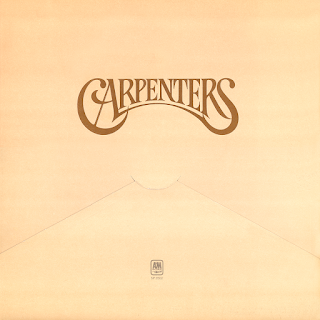
"Carpenters," by Carpenters


Carpenters’ sophomore effort, Close To You, launched the siblings into superstardom. The one-two punch of the #1 and #2 singles, “Close To You,” and “We’ve Only Just Begun,” respectively, catapulted the duo into the public eye, and that breakthrough album remains a fan, as well as a critical, favorite, landing high on Rolling Stone magazine’s list of “Top 500 Albums of All Time.” And deservedly so, but it was the album that followed, the eponymous “tan album,” which is lesser-known today, that stands as Carpenters’ highest-selling, non-compilation album, stateside. One might argue that the album’s stunning sales figures were singularly due to inertia from the Close To You phenomenon, and that may well be a factor, but I argue that the album, itself, contains some of the sibling’s best musical contributions and reflects the flavor of pop music in 1971. Relevant sidebar: tapping into the spirit of early 1970’s pop music was a knack for which brother Richard singularly possessed, with few missteps, for four solid years between 1970 and 1973. He was the Kanye West of that moment in pop music history.

And to be sure, Carpenters placed three of its singles into the top echelons of the charts that year, starting with the Oscar winning “For All We Know,” #3, from the film, Lovers And Other Strangers, followed by the classic Paul Williams/Roger Nichols track, “Rainy Days And Mondays,” #2, and the definitive version of Leon Russell’s, “Superstar,” #2, a song, which had previously failed to catch on, even after covers by “superstars,” Rita Coolidge and Bette Midler. Karen’s sensual reading, recorded in just one take, delivered the perfect rendering of heartbreak and unrequited love. The album reached #2 on the Billboard album chart, went on to win a Grammy, that year, for “Best Pop Vocal Performance – Duo or Group,” and perhaps most significantly, it introduced fans to the indelible, now instantly recognizable band logo.

Hits aside, the album delivered two quintessential Carpenter album tracks, a future commercial jingle, an obscure Henry Mancini composition, one song that would most certainly have been a top 5 hit, had it been released in 1971, one cringe-inducing moment, and one, extended track that may well be their most perfect, musical moment. Here's the rundown: 

Two quintessential Carpenters album tracks:
  1. (A Place To) Hideaway” - A perfect song for the siblings’ old-fashioned style, this sentimental song was written by Randy Sparks, the founder of the New Christy Minstrels and author of the 1970’s wedding standard, “Today.”
  2. One Love” – Richard lifted a line from this song of heartbreak in the liner notes for the first posthumous Carpenters album, Voice Of The Heart, “Few are the choices we are given; the sands of time pass quickly by…”


Future commercial jingle: “Saturday.”
When my partner and I moved to California a few years ago, we heard, on a television commercial, an even perkier (believe it or not) cover of this already bubbly ditty about the joys of Saturday. It’s one of the rare lead vocals by Richard and his second best, after “I Kept On Loving You,” from Close To You.

Obscure Henry Mancini composition: “Sometimes.”
As the story goes, in the late 1960’s, Henry Mancini’s daughter, Felice, wanted to give her parents a unique gift for the holidays, so instead of buying them a present, she wrote a poem about how much her family meant to her. Her famous composer father loved it so much, that he set the poem to music, and the siblings loved the resulting song so much, that they included it on their third album. It might be the gentlest song I’ve ever heard.

Had it been released in 1971, “Let Me Be The One” would have, most certainly, been a Top 5 hit. Having a smash hit with “We’ve Only Just Begun,” by the third album, the duo actively sought-out Roger Nichols/Paul Williams compositions for hits, and “Let Me Be The One” was strongly considered as a first-single off the sibling’s self-titled LP. Richard has noted, over time, that he regrets not releasing this one as a single, as he believes it would have easily been another top-5 hit in 1971. I’m inclined to agree.

Cringe-inducing moment: “Drucilla Penny.”
By this point in their career, Karen was the clear lead-singer for band, yet, Richard still, apparently, felt compelled to deliver the lead on a few songs on each album. Of all the songs Carpenter/Bettis might have written together for brother Richard to record, why this one? Its prissy, preachy, finger-wagging lyrics about groupies are just embarrassing (did Carpenters even have groupies?). This track, no doubt, did little to help the duo with rock critics that year.

Perfect musical moment: “Bacharach/David Medley.”
Before the siblings took over the world in the early 1970’s, they were fledgling musicians signed to A&M Records. Burt Bacharach was a fan of Carpenters’ version of “Ticket To Ride,” and he asked Herb Albert if the duo would put together a medley of Bacharach/Hal David songs for a 1969 fund-raiser. This is the medley Richard arranged, and legend has it that it was at this time that he was introduced to their break-through single, “Close To You.” Ernesto Lechner, from Rolling Stone magazine, indicated that the medley “…is arguably the group’s most impressive moment – light and breezy, slightly jazzy, the work of two young idealists who are still in love with life and its endless possibilities” (2004).

An apt description for both the medley and the entire album, and while not their most critically acclaimed release, that award goes to A Song For You, the “tan album” captures the duo at the most exciting moment in their lives and careers, both had just begun, and that spring, it seemed like anything was possible for Karen and Richard. And indeed, for the next few years in the early 1970’s, everything they touched seemed to turn to gold. 

Thursday, December 20, 2012

"The Seeds Of Love," by Tears For Fears


A few years ago I read an interview with a “hot” young musician, who subsequently faded away (forgive my feeble memory; I don’t remember his name; it’s on the tip of my tongue…), who was backhandedly complimenting Tears for Fears during their commercial heyday, citing their classic pop hits, like “Everybody Wants To Rule The World,” “Shout,” and “Sowing The Seeds Of Love,” as “wonderful, but dated, forever stuck in 1980’s synthesizers.” I have to disagree. I liken describing Tears for Fears’ music as “stuck in the 1980’s,” to saying David Bowie’s music is stuck in the 1970’s. Is it a product of its cultural and musical timeframe? Certainly, but isn’t that precisely from where it derives its artistic power and musical strength? Isn’t that the job of pop music, to reflect the mores and zeitgeist of the moment in 3-minute verse-chorus-verse format?

But hype is fascinating like that. Don’t believe me? Watch your facebook newsfeed evolve after a national event; it serpentines, with facebook friends jumping on the bandwagon of the thought-o-the-moment with cattle stampede-like trajectories of opinion. And so it goes with the music industry that hypes “the next big thing,” only to turn 180 degrees months, weeks, days later when it appears the trend is going in a different direction. Popular music is riddled with artists who should have been the “second coming,” only to fall short when trends shift. To wit, in the 1970’s, insiders speculated that The Knack was, secretly, the re-formed Beatles (sigh…if only), in the 1980’s, Terence Trent D’Arby was supposed to be the second coming of James Brown (sadly, not), and in the 1990’s, Sophie B. Hawkins was supposed to alter the direction of popular music (that said, I still enjoy her eccentric, sadly underappreciated music). And after their 15 minutes of fame were spent, these artists faded into their respective obscurities.

Such was the case with Tears for Fears much touted third release, The Seeds Of Love. Buoyed by the accumulated success of their previous two albums, the critically acclaimed, but slow-burning (in the U.S.) debut, The Hurting, and the world-wide, multi-platinum smash of Songs From The Big Chair, Roland Orzabal and Curt Smith were poised for musical world domination with their highly and long-anticipated follow-up, The Seeds Of Love. Indeed, arriving four years after its predecessor, The Seeds Of Love was to be the next big thing. How could it not be that? The first single, “Sowing The Seeds Of Love,” with it’s Beatles-influenced backdrop and inventive, accompanying video, rocketed to #2 on the Billboard chart and worked the awaiting, record-buying public into a frenzied froth (as a good lead-off single should). So much so, that in its November 1989 album review, the trend-conscious Rolling Stone magazine gave the album an almost perfect review: four out of five stars, reviewer Michael Azerrad stated, “…it's exciting that such thought-provoking music will undoubtedly be so widely heard. If with the title track Tears for Fears beg comparison to the Beatles, it's in the unspoken assertion that popular music can also be outstanding music. That's something this remarkable record proves over and over again.” 

Well said, Mr. Azerrad, well said. But just one year later in its year-end issue, the same publication trashed the album, calling the songs meandering and “overlong.” So which is it, Rolling Stone? What changed about the album in 10 months? Was it good or not? Apparently not, or maybe something else was afoot. After all, the subsequent singles from the album faired far less than the leadoff single (hard to imagine a feminist anthem competing strongly against the featherweight pop of Wilson Phillips, Michael Bolton, and Milli Vanilli). MTV, pop radio, and the record-buying public couldn’t be wrong about this one…right?

Whichever way you look at it, I’m inclined to agree with Azerrad’s original opine: The Seeds Of Love is a remarkable piece of work, likely the duo’s best effort, and worthy of another listen (or two or three…). Featuring only eight songs, side one became the “singles” side, featuring three of the most well-known singles from the album, the grandiose, everything-but-the-kitchen-sink #2 smash, “Sowing The Seeds Of Love,” the sensitive-man-as-feminist duet with (the stunning) Oletta Adams, “Woman In Chains,” and the playful, sunshine pop confection, “Advice For The Young At Heart,” with the borrowed John Lennon line, “Love is a promise, love is a souvenir; once given, never forgotten, never let it disappear…” The final song on the album, “Famous Last Words,” while one of my favorite tracks, was released as the album’s last single but disappeared without a trace as the album, by that time, had been widely forgotten by all parties concerned.

While references to The Beatles are undeniable (even down to the Sgt Pepper’s-like collage of an album cover), I liken The Seeds Of Love less to any, one Beatles album than I would compare it to Pink Floyd’s perennial classic, Dark Side of The Moon, with its swirling jazz riffs, melancholy atmospherics, sweeping soundscapes, and soulful, tortured vocals by Oletta Adams, who went on to a highly successful career as a soul singer after being launched by this album. Indeed, the tracks on Seeds Of Love, like the tracks on Dark Side Of The Moon, are longer than the standard pop song, clocking-in at an average of over 6 minutes, but Orzabal seemed to be going more for Alan Parsons style epics than catchy 3 minute pop petit fours. Viewing his entire catalogue, I’ve come to believe that Roland Orzabal can’t not write a song without a tangible melody, and Seeds Of Love is no exception. That said, the album is scarce on pop hooks, per se, but the album seems crafted to build a significantly more satisfying musical experience over time, with repeated listens, much like Dark Side Of The Moon’s epic journey, except instead of a musical case study in madness, Seeds Of Love examines a road map of the human heart. We seem to still need that...