Showing posts with label Leon Russell. Show all posts

Saturday, May 25, 2013

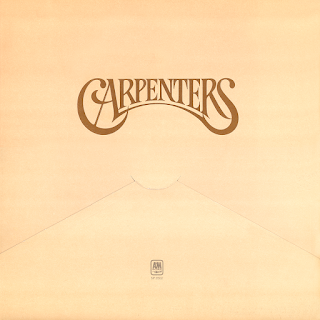
"Carpenters," by Carpenters


Carpenters’ sophomore effort, Close To You, launched the siblings into superstardom. The one-two punch of the #1 and #2 singles, “Close To You,” and “We’ve Only Just Begun,” respectively, catapulted the duo into the public eye, and that breakthrough album remains a fan, as well as a critical, favorite, landing high on Rolling Stone magazine’s list of “Top 500 Albums of All Time.” And deservedly so, but it was the album that followed, the eponymous “tan album,” which is lesser-known today, that stands as Carpenters’ highest-selling, non-compilation album, stateside. One might argue that the album’s stunning sales figures were singularly due to inertia from the Close To You phenomenon, and that may well be a factor, but I argue that the album, itself, contains some of the sibling’s best musical contributions and reflects the flavor of pop music in 1971. Relevant sidebar: tapping into the spirit of early 1970’s pop music was a knack for which brother Richard singularly possessed, with few missteps, for four solid years between 1970 and 1973. He was the Kanye West of that moment in pop music history.

And to be sure, Carpenters placed three of its singles into the top echelons of the charts that year, starting with the Oscar winning “For All We Know,” #3, from the film, Lovers And Other Strangers, followed by the classic Paul Williams/Roger Nichols track, “Rainy Days And Mondays,” #2, and the definitive version of Leon Russell’s, “Superstar,” #2, a song, which had previously failed to catch on, even after covers by “superstars,” Rita Coolidge and Bette Midler. Karen’s sensual reading, recorded in just one take, delivered the perfect rendering of heartbreak and unrequited love. The album reached #2 on the Billboard album chart, went on to win a Grammy, that year, for “Best Pop Vocal Performance – Duo or Group,” and perhaps most significantly, it introduced fans to the indelible, now instantly recognizable band logo.

Hits aside, the album delivered two quintessential Carpenter album tracks, a future commercial jingle, an obscure Henry Mancini composition, one song that would most certainly have been a top 5 hit, had it been released in 1971, one cringe-inducing moment, and one, extended track that may well be their most perfect, musical moment. Here's the rundown: 

Two quintessential Carpenters album tracks:
  1. “(A Place To) Hideaway” - A perfect song for the siblings’ old-fashioned style, this sentimental song was written by Randy Sparks, the founder of the New Christy Minstrels and author of the 1970’s wedding standard, “Today.”
  2. “One Love” – Richard lifted a line from this song of heartbreak in the liner notes for the first posthumous Carpenters album, Voice Of The Heart, “Few are the choices we are given; the sands of time pass quickly by…”


Future commercial jingle: “Saturday.”
When my partner and I moved to California a few years ago, we heard, on a television commercial, an even perkier (believe it or not) cover of this already bubbly ditty about the joys of Saturday. It’s one of the rare lead vocals by Richard and his second best, after “I Kept On Loving You,” from Close To You.

Obscure Henry Mancini composition: “Sometimes.”
As the story goes, in the late 1960’s, Henry Mancini’s daughter, Felice, wanted to give her parents a unique gift for the holidays, so instead of buying them a present, she wrote a poem about how much her family meant to her. Her famous composer father loved it so much, that he set the poem to music, and the siblings loved the resulting song so much, that they included it on their third album. It might be the gentlest song I’ve ever heard.

Had it been released in 1971, “Let Me Be The One” would have, most certainly, been a Top 5 hit. Having a smash hit with “We’ve Only Just Begun,” by the third album, the duo actively sought-out Roger Nichols/Paul Williams compositions for hits, and “Let Me Be The One” was strongly considered as a first-single off the sibling’s self-titled LP. Richard has noted, over time, that he regrets not releasing this one as a single, as he believes it would have easily been another top-5 hit in 1971. I’m inclined to agree.

Cringe-inducing moment: “Drucilla Penny.”
By this point in their career, Karen was the clear lead-singer for band, yet, Richard still, apparently, felt compelled to deliver the lead on a few songs on each album. Of all the songs Carpenter/Bettis might have written together for brother Richard to record, why this one? Its prissy, preachy, finger-wagging lyrics about groupies are just embarrassing (did Carpenters even have groupies?). This track, no doubt, did little to help the duo with rock critics that year.

Perfect musical moment: “Bacharach/David Medley.”
Before the siblings took over the world in the early 1970’s, they were fledgling musicians signed to A&M Records. Burt Bacharach was a fan of Carpenters’ version of “Ticket To Ride,” and he asked Herb Albert if the duo would put together a medley of Bacharach/Hal David songs for a 1969 fund-raiser. This is the medley Richard arranged, and legend has it that it was at this time that he was introduced to their break-through single, “Close To You.” Ernesto Lechner, from Rolling Stone magazine, indicated that the medley “…is arguably the group’s most impressive moment – light and breezy, slightly jazzy, the work of two young idealists who are still in love with life and its endless possibilities” (2004).

An apt description for both the medley and the entire album, and while not their most critically acclaimed release, that award goes to A Song For You, the “tan album” captures the duo at the most exciting moment in their lives and careers, both had just begun, and that spring, it seemed like anything was possible for Karen and Richard. And indeed, for the next few years in the early 1970’s, everything they touched seemed to turn to gold. 

Wednesday, December 31, 2008

"A Song for You," by The Carpenters


Being a Carpenters fan in high school in 1985 was a lonely road. On the positive side, it felt cool, somehow...punk even, to be into this virtually unknown, very un-cool brother / sister act from over a decade before: Karen and Richard Carpenter. Nobody, and I mean nobody else in my school (maybe a few teachers...) knew about Carpenters. Conversely, it was impossible to really be a fan, because there was nobody who understood how very good they consistently were. Consistently good, at least, until 1974, when they stopped eating, lost their musical focus, and started chasing after pop culture trends du jour. In the late 1970’s, this meant silly TV specials with "guest stars," like Suzanne Somers, Captain & Tennille chasing, and even Star Wars “outer space” experiments – ridiculous. Gone were the brother and sister duo that made stunningly beautiful music at a time when the country most needed it (e.g., Vietnam, Kent State shooting, Altamont, etc.). Besides the Christmas album in 1978, Carpenters last grasp at relevance came with their 1975 album, Horizon. But critics never held Carpenters in high esteem, even when they were very good. In fact, in the seventies it was practically a requirement for rock journalists to publicly berate their music.

Time changes perspective, however, and Carpenters have received significant critical reassessment over the past decade. And the reason, put simply, is the music. In a 2008 Rolling Stone magazine list of “Greatest 100 Singers of All Time,” Elton John called Karen Carpenter "one of the greatest voices of our lifetime," and Madonna has said she is "completely influenced by her harmonic sensibility," whatever that means. The Rolling Stone entry continued, “Impossibly lush and almost shockingly intimate, Carpenter's performances were a new kind of torch singing, built on understatement and tiny details of inflection that made even the sappiest songs sound like she was staring directly into your eyes.” Carpenters’ influence extends to many, including Sonic Youth, The Cranberries, Belle & Sebastian, Sheryl Crow, French electronica maestros, AIR, and, yes, even Daft Punk, to name a few.

And between 1969 and 1973, the Carpenters released an album a year with virtually no missteps. Nestled in the middle of this creative peak was A Song For You in 1972. That album alone contained six of the duo’s 25 hit singles (e.g., “Top Of The World,” “Hurting Each Other,” It’s Going To Take Some Time,” etc.), including the Oscar-nominated, "Bless The Beasts And The Children," but the singles were only half the fun. A Song For You also holds some of the best musical moments the duo ever created. Specifically, the album kicks off on a high point with the oft-covered Leon Russell title track. Originally intended as a concept album of sorts, the Russell song is reprised to bookend the album, thats lyric, in hindsight, is simply heartbreaking. Another standout track, “Road Ode,” is a stark mediation on celebrity and life on the road (written on tour a year earlier by Carpenters band members after a concert at Southern Illinois University). The song hinted at the siblings’ disappointing personal lives and foreshadowed the tragedy ahead. The solitary throwaway track was the one lead vocal by Richard, “Piano Picker,” a cheerful ditty about being nerdy and learning to play the piano; it’s not terrible, just unnecessary.

But the crowning moment of this record for me is the single, “I Won’t Last A Day Without You.” In just under four minutes, it delivers the quintessential elements of a classic Carpenters record. Opening on a somber note, with a solitary piano and Karen’s milk chocolate voice, at once wistful and joyful, the song ends with the group’s trademark multi-layered vocal harmonies. So great the song, in fact, that it rose all the way to number 11 on the pop charts a full two years after the album’s release and after three subsequent single releases from the next album the following year (Now and Then). The album, and Carpenters, seemed unstoppable that year, and the American public just kept returning to this essential album for more. Some of us still do.