Showing posts with label Roger Nichols. Show all posts

Saturday, May 25, 2013

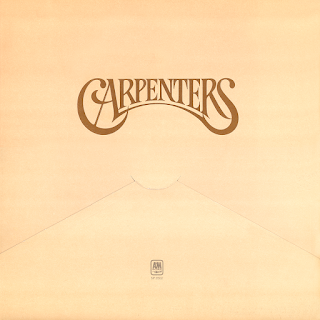
"Carpenters," by Carpenters


Carpenters’ sophomore effort, Close To You, launched the siblings into superstardom. The one-two punch of the #1 and #2 singles, “Close To You,” and “We’ve Only Just Begun,” respectively, catapulted the duo into the public eye, and that breakthrough album remains a fan, as well as a critical, favorite, landing high on Rolling Stone magazine’s list of “Top 500 Albums of All Time.” And deservedly so, but it was the album that followed, the eponymous “tan album,” which is lesser-known today, that stands as Carpenters’ highest-selling, non-compilation album, stateside. One might argue that the album’s stunning sales figures were singularly due to inertia from the Close To You phenomenon, and that may well be a factor, but I argue that the album, itself, contains some of the sibling’s best musical contributions and reflects the flavor of pop music in 1971. Relevant sidebar: tapping into the spirit of early 1970’s pop music was a knack for which brother Richard singularly possessed, with few missteps, for four solid years between 1970 and 1973. He was the Kanye West of that moment in pop music history.

And to be sure, Carpenters placed three of its singles into the top echelons of the charts that year, starting with the Oscar winning “For All We Know,” #3, from the film, Lovers And Other Strangers, followed by the classic Paul Williams/Roger Nichols track, “Rainy Days And Mondays,” #2, and the definitive version of Leon Russell’s, “Superstar,” #2, a song, which had previously failed to catch on, even after covers by “superstars,” Rita Coolidge and Bette Midler. Karen’s sensual reading, recorded in just one take, delivered the perfect rendering of heartbreak and unrequited love. The album reached #2 on the Billboard album chart, went on to win a Grammy, that year, for “Best Pop Vocal Performance – Duo or Group,” and perhaps most significantly, it introduced fans to the indelible, now instantly recognizable band logo.

Hits aside, the album delivered two quintessential Carpenter album tracks, a future commercial jingle, an obscure Henry Mancini composition, one song that would most certainly have been a top 5 hit, had it been released in 1971, one cringe-inducing moment, and one, extended track that may well be their most perfect, musical moment. Here's the rundown: 

Two quintessential Carpenters album tracks:
  1. “(A Place To) Hideaway” - A perfect song for the siblings’ old-fashioned style, this sentimental song was written by Randy Sparks, the founder of the New Christy Minstrels and author of the 1970’s wedding standard, “Today.”
  2. “One Love” – Richard lifted a line from this song of heartbreak in the liner notes for the first posthumous Carpenters album, Voice Of The Heart, “Few are the choices we are given; the sands of time pass quickly by…”


Future commercial jingle: “Saturday.”
When my partner and I moved to California a few years ago, we heard, on a television commercial, an even perkier (believe it or not) cover of this already bubbly ditty about the joys of Saturday. It’s one of the rare lead vocals by Richard and his second best, after “I Kept On Loving You,” from Close To You.

Obscure Henry Mancini composition: “Sometimes.”
As the story goes, in the late 1960’s, Henry Mancini’s daughter, Felice, wanted to give her parents a unique gift for the holidays, so instead of buying them a present, she wrote a poem about how much her family meant to her. Her famous composer father loved it so much, that he set the poem to music, and the siblings loved the resulting song so much, that they included it on their third album. It might be the gentlest song I’ve ever heard.

Had it been released in 1971, “Let Me Be The One” would have, most certainly, been a Top 5 hit. Having a smash hit with “We’ve Only Just Begun,” by the third album, the duo actively sought-out Roger Nichols/Paul Williams compositions for hits, and “Let Me Be The One” was strongly considered as a first-single off the sibling’s self-titled LP. Richard has noted, over time, that he regrets not releasing this one as a single, as he believes it would have easily been another top-5 hit in 1971. I’m inclined to agree.

Cringe-inducing moment: “Drucilla Penny.”
By this point in their career, Karen was the clear lead-singer for band, yet, Richard still, apparently, felt compelled to deliver the lead on a few songs on each album. Of all the songs Carpenter/Bettis might have written together for brother Richard to record, why this one? Its prissy, preachy, finger-wagging lyrics about groupies are just embarrassing (did Carpenters even have groupies?). This track, no doubt, did little to help the duo with rock critics that year.

Perfect musical moment: “Bacharach/David Medley.”
Before the siblings took over the world in the early 1970’s, they were fledgling musicians signed to A&M Records. Burt Bacharach was a fan of Carpenters’ version of “Ticket To Ride,” and he asked Herb Albert if the duo would put together a medley of Bacharach/Hal David songs for a 1969 fund-raiser. This is the medley Richard arranged, and legend has it that it was at this time that he was introduced to their break-through single, “Close To You.” Ernesto Lechner, from Rolling Stone magazine, indicated that the medley “…is arguably the group’s most impressive moment – light and breezy, slightly jazzy, the work of two young idealists who are still in love with life and its endless possibilities” (2004).

An apt description for both the medley and the entire album, and while not their most critically acclaimed release, that award goes to A Song For You, the “tan album” captures the duo at the most exciting moment in their lives and careers, both had just begun, and that spring, it seemed like anything was possible for Karen and Richard. And indeed, for the next few years in the early 1970’s, everything they touched seemed to turn to gold. 

Sunday, December 11, 2011

"Close To You," by Carpenters


Some of the greatest albums in the Rock-and-Roll canon were recorded in the early 1970s. To wit, “What’s Going On?” by Marvin Gaye, “Tapestry,” by Carole King, “Bridge Over Troubled Water,” by Simon and Garfunkel, “Dark Side Of The Moon,” by Pink Floyd, and classic recordings by David Bowie, Elton John, Paul McCartney, John Lennon, Nick Drake, and James Taylor, to name just a few. One of my favorites from the era, and a remarkably influential Polaroid from that period of popular music, was the second album by the brother-sister duo from Downey, California: Carpenters, Close To You. “Rollingstone” magazine lists the album as one of the “Best 500 albums” of all time - in the top 200 no less! It's also listed in the 2005 book, "1001 Albums You Must Hear Before You Die," which inspired the moniker for this blog. And while not the artistic pinnacle of the duo’s career (that would be two albums later, the 1972 classic, A Song For You), it was one of Carpenters best sellers and the album that launched their highly successful, but ultimately tragic career.

The Carpenter family moved from New Haven, Connecticut to Downey, California in the early 1960’s for a job opportunity for Dad Carpenter and to be closer to Los Angeles, where Richard could be closer to the nexus of the music industry. At that time, Richard was the sole musician in the family, while Karen mostly tagged along behind her big brother, tapping the drum kit grudgingly purchased for her by her parents ("girls don’t play the drums"). It wasn’t until later, when recording demos in a friend’s garage studio that, on a whim, Richard put Karen on the microphone, and he realized his little sister could sing. Karen reportedly wasn’t convinced of her remarkable gift until sometime later, with some close friends suggesting she always thought of herself as a “drummer who sang.”

After a few years of gigging around the L.A. music scene, sending demos to and getting rejections from every major recording studio in the industry, the siblings landed a short-lived recording contract with RCA (the prize for winning the Hollywood Bowl “Battle of the Bands,” contest in 1966). The songs recorded with RCA never saw the light of day, however, and the band was released from their contract, as RCA execs felt the duo were not commercial enough. A few years later, their demo landed in the cassette player of Herb Albert, popular musician and co-founder of A&M Records, and he signed the duo in 1969. Their first album, Offering, was less-than-meteoric (although well-worth seeking out), but yielded their first chart single, a startling re-imagination of The Beatles’ classic, “Ticket to Ride.”

After the single and album finished a brief run on the charts, A&M decided to give the duo one more chance, but this time by releasing a final, make-or-break single. Essentially at their label’s mercy, Richard and Karen agreed to record a saccharine Burt Bacharach song, which had been released numerous times in the previous decade to little success. But Herb Albert felt it would be right for Karen’s voice, and frankly, while not thrilled to do so, the siblings had no choice and recorded that tune with over-the-top lyrics (“On the day that you were born the angels got together and decided to create a dream-come-true, so they sprinkled moon dust in your hair and golden starlight in your eyes of blue.”). After the recording session for “(They Long To Be) Close To You,” Herb Albert and Richard Carpenter sat on the stoop in the A&M parking lot, discussing the potential for the single. Carpenter predicted, “It will either be a #1 hit or the biggest stiff the label has ever recorded.” “Close To You” became Carpenters’ first #1 single, remaining in the top position for a month and catapulting the siblings into instant fame and a whirlwind of recording and promotional activity.

And this is how the Close To You album was born, amidst a flurry of activity in the wake of the “overnight success” of the Bacharach single. A&M wanted to leverage the success of the monster hit song, while Richard and Karen were just grateful to still have a recording contract. But having gone through most of their original material on their first album, Richard was left with the task of finding new songs for the follow-up album. Serendipity intervened. As “Close To You” rose on the charts, Richard saw a bank commercial on late night television. He couldn’t help but notice the background song, written by Paul Williams and Roger Nichols, about a young couple just getting started, and he wondered if the jingle existed as a complete song. It didn’t, but when Williams and Nichols were contacted about a full-song, they happily obliged, finishing “We’ve Only Just Begun” by adding another verse and submitting it for recording.

The rest of the Close To You album was recorded in like manner: hurriedly, between promotional engagements and concerts, but the results were astonishing, for an album thrown-together in the duos precious free time between gigs. Including a mix of Carpenter-penned originals with Bacharach and Roger Nichols and Paul Williams songs and another Lennon-McCartney cover, the album was probably the last “rock” effort the duo produced, as they spent the remainder of the early seventies focusing on their sublime hit pop singles. Speaking of hit singles, I’ve always held that, while containing two of the duo’s best-known songs, the album could have spawned even more hits, including the Carpenter original, “Maybe It’s You,” and the Bacharach cover of the Shirelles’ 1961 top-ten hit, “Baby It’s You.” The siblings’ demonstrate their lesser-appreciated rock-and-roll leanings with the Beatles’ “Help!” and the grandiose album closer, the spellbinding Carpenter original, “Another Song.”

The album was a monster, selling millions of copies and launching the duo into the chaos that would be the next five years of hits, constant touring, and television appearances. In hindsight, it was too much. I’ve often wondered what might have been, had the duo taken the remainder of the 1970s off after their hits compilation around the middle of the decade. But sadly, they got caught up in the star-maker machinery, unwisely chasing horrid 1970’s pop culture trends, and essentially losing focus. And while the hits never stopped (in fact, the duo enjoyed top 40 hits on every album released during Karen’s lifetime, up to their final hit single, “Touch Me When We’re Dancing,” #16 in 1981), their albums in the latter part of the decade, while always delivering one or two gems (mostly due to Karen’s creamy, alabaster voice), were largely forgettable efforts. But Close To You reflects a moment when the siblings were young and optimistic. They'd only just begun to do their thing, and the album accidentally became an early 1970’s classic.