Showing posts with label MTV. Show all posts

Sunday, May 11, 2014

The Last Of The Monkees


You’ve heard the story: The Monkees were a made-for-TV rock band that’s first two albums were engineered in a hit-making studio-lab featuring the talent of pop music’s most reliable songwriting and studio pros of the moment. The rock press maligned the foursome for not playing their own instruments on the recordings and for not writing their own songs (which, today, is normative). But the lads, to their great credit, ultimately became a real band, writing, playing, and producing the entirety of their third album, Headquarters. As noted by All Music Guide, the albums the band made after wrestling artistic control from Don Kirchner proved “…they were legitimate musicians with enough brains, heart, and soul as anyone else claiming to be a real band...” And Micky Dolenz famously likens The Monkees becoming a legitimate band to Leonard Nimoy becoming a real Vulcan. And yet it happened.

The television program ended after two short, successful seasons, after which the radio hits quickly dried up (no longer having a weekly vehicle to promote the songs), which is unfortunate for Top 40 radio in the late 1960’s, as their subsequent, self-directed albums proved no less engaging. I’ll be addressing them here, taken together – the final four original albums by The Monkees. I encountered Monkee-mania in its second (or maybe third?) iteration, through the MTV-fueled, twentieth Anniversary resurgence, and as a result, a new generation of fans and I were exposed, ad nauseam, to the band’s 12 top-40 hits, mostly coming from their first five million-selling albums, which mainly demonstrated the vision of the producers, music directors, and the television program, but gave little insight into the four individual members of the band. I’d argue that the final four original albums, while not only revealing so much more about Nesmith, Jones, Thorkelson, and Dolenz, also contain some of group’s best musical moments.

The downward sales spiral and the band’s ultimate demise started with their ill-fated film, Head. The idea behind the movie was to explode the whole mythology behind The Monkees: “a manufactured image with no philosophies.” It was a declaration of independence, of sorts, for the four actors/musicians, who were eager to shed the baggage of the kid-friendly television program. The film touched upon every movie genre imaginable as well as a few made-up ones as well, and it ended where it began, with the band running away from what it had become and featuring some of the best pop songs of the moment, from the psychedelic warmth of the movie’s theme song, the Goffin/King gem, “The Porpoise Song,” to Nesmith’s rocking barn-burner, “Circle Sky,” to the mellow gold, Carole King-penned, “As We Go Along.” Interspersed with snippets of dialogue from the film, the soundtrack is eclectic, eccentric, fun, and well-worth seeking out. Rhino recently released a 60-track collector’s edition of the soundtrack, featuring live versions and alternate vocal tracks as well as a few interviews from the era. 

After Head, Tork left, and then there were three. Instant Replay was the first album from the group that wasn’t connected to either a television program or to a film. Released just two months after the film soundtrack, the powers-that-be at Colgems apparently presumed the band still had sales potential. And while not boasting any true hit singles, the album did manage to eke its way up #32 on the album charts in the spring of 1969. The first single, the Boyce and Hart-penned, “Tear Drop City,” was an outtake from some of their earliest 1966 recording sessions and sounds suspiciously similar to their #1 debut single, “Last Train To Clarksville.” Truth was, it was reportedly an attempt by the band to reclaim territory on the pop charts by reaching into the hit-filled Kirchner vaults. Either way, it was a likable, sunny pop song that just missed the top 40 that summer, peaking at #56. Other gems on this forgotten album include the Goffin/King songs, “I Won’t Be The Same Without Her” and “A Man Without A Dream,” Jones’ acidic vocal on “You and I,” which boasted equally acidic guitar work by Neil Young, and the Neil Sadaka/Carole Bayer-Sager coulda-been-a-hit-in-1966, “The Girl I Left Behind Me.” The album’s closer, the McCartney-esque, bombastically schizophrenic cat biography, “Shorty Blackwell,” featured three separate, yet intertwining sonic movements and was written by Dolenz, foreshadowing the quirky art pop to come from the actor turned drummer turned songwriter (and my favorite Monkee: I love you, Micky Dolenz!).

The Monkees Present: Micky, David, Michael was originally conceived back when Peter Tork was still with the group and had been planned as a double album, devoting one side to each Monkee. With Tork absent and sales dwindling, the main concept was retained, but the project abbreviated to two sides, with songs contributed separately by the remaining three. Standout tracks include Nesmith’s country-rock, “Good Clean Fun,” (#82) one of the albums failed singles, and the Nesmith’s fan-favorite and leadoff single, “Listen To The Band” (#63). Davy submitted some of his best recorded efforts ever in tried-and-true starry-eyed mode for which he had become most known, the self-penned, “If I Knew” and the eerie, lounge-act number, “French Song,” as well as a surprising rocker written by the reliable tunesmiths, Boyce and Hart, “Looking For The Good Times.” As with the last LP, Micky Dolenz turned-in the most experimental tracks, with the terse album opener, “Little Girl,” and the similarly claustrophobic and excellent, “Bye-Bye, Baby, Bye-Bye.” Dolenz also contributed the album’s third failed single, the overtly political and tightly coiled, “Mommy and Daddy,” (#109). More musically gifted than many might have presumed, I’ve often wondered what might have happened had Dolenz chosen to devote himself to a musical, post-Monkees career (sigh...).

After Present, Nesmith left, and then there were two. Changes was the final “original” Monkees album, which featured the two actors in the band, Dolenz and Jones, with industry insiders joking that the final remaining band member would eventually release an album as “The Monkee.” **Good one, industry insiders** This contractual obligation of an album was produced and largely written by Jeff Barry and Andy Kim (“Rock Me Gently,” #1, 1974) and is surprisingly strong. By my ear, Changes is a perfect representation of the type of preteen-oriented bubblegum music being released around that time (e.g., “A-B-C,” The Jackson 5, “Sugar, Sugar,” The Archies – which was another Andy Kim song, by the way, “Dizzy,” Tommy Roe, “Simon Says,” 1910 Fruitgum, “I Think I Love You,” Partridge Family…). Standouts include the album opener and sole single, “Oh, My My” (#98), the mournful, meandering melody of “Ticket On A Ferry Ride,” and “You’re So Good To Me,” which rounds out the album’s first three tunes. “Acapulco Sun” and the Dolenz-penned, playful, country-R&B tune, “Midnight Train,” which was recorded during the sessions for the previous album, also hold their own on this universally ignored, final Monkees release. While neither Jones nor Dolenz reported having fond memories of the recording sessions or of the album, it’s a surprisingly enjoyable and playful Polaroid of that era in pop music.

After The Monkees, Tork wandered aimlessly through the next two decades doing a stint in prison for marijuana possession and meandering in and out of various rock bands. Nesmith enjoyed modest success as a country-rock pioneer and early adopter of music videos, and the final two Monkees quietly made their ways into the tumultuous new decade, with Jones releasing a failed solo album in 1971 and making ends meet with guest appearances on The Brady Bunch, etc., and Dolenz, financially solvent from the success of The Monkees, eventually carving out a career for himself as a television director in the UK. Twenty years later came the MTV-fueled reunion extravaganza, which gave the group an unexpected (and unnecessary?) half-life, providing opportunity for the group to release new recordings in the late 1980’s and into the 1990’s in various incarnations. None of the new material comes close to the quality of their 1960’s recordings, and The Monkees story came to a sad end with Jones’ untimely death in 2012. “Goodnight, goodnight everybody; everybody everywhere, goodnight.”

Saturday, October 13, 2012

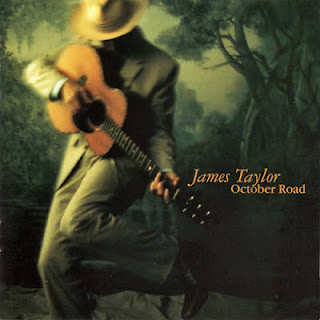
"October Road," by James Taylor


I bought this album in early September of 2002, shortly after its release and just one year after large-scale terrorism single-handedly imploded the United States with not only the magnitude of its evil destruction, but also by the debacle and needless disfigurement that would become a series of decade-long wars in the Middle East. And like everybody else in the country seemed to be in those days, I was in heavy introspection and reinvention mode. Thank God for James Taylor. I was ready for a diversion and for something hopeful, and after spending my 20’s in the wonderful town where I went to college I decided to take a job in a different location. And while a new work opportunity made me hopeful for what might lie ahead, the unfamiliar territory made me reflective and sentimental. This tender album served as my travel companion as I said “goodbye” to DeKalb, Illinois and made my new home in Lake Forest, Illinois.

Lyrically wistful and nostalgic, on October Road, Taylor sings about high school crushes, first kisses, football games, and the sights, sounds and smells of the months between the autumnal equinox to the winter solstice. In fact, songs on the album reference the entire second half of the calendar year: July through December. “On The 4th Of July,” “September Grass,” “October Road,” “Caroline I See You,” and even the seemingly out-of-place, but somehow-still-works cover of the holiday classic, “Have Yourself A Merry Little Christmas.” The album suggests the second half of the year as a time to wonder and rejoice, versus the hectic, hustle-and-bustle of the first two seasons. October Road reminds me of one of the best periods of my own life: the first year of being married to my partner. The album was the soundtrack to so many Chicago-land road trips together as Kristina and I navigated a new geographic region, weekend errands and groceries, carefree apartment living, and generally getting better acquainted. I treasure those days.

While there are numerous stand-out tracks on this album (i.e., the aforementioned, “September Grass” and the uber-mellow, grilled cheese and hot chocolate, one-two punch of “Caroline I See You” and “Baby Buffalo”), the songs on October Road are also of a piece, conjuring autumn and winter imagery: colored leaves on the ground, family and good friends, crisp, November air, and the smell of bonfires, hayrides, and pumpkin pie. Taylor’s lyrics on this album are road-worn and familiar, cozy and comforting. In fact, October Road reads like the third and fourth season travelogue of a man who has finally achieved a certain level of satisfaction and contentment with his life. And if my James Taylor history is correct, this serenity has been hard-won.

Most folks over a certain age know about James Taylor’s “soft rocking, hard living” early days, as one of the principle auteurs of the singer/songwriter genre (along with Joni Mitchell, Neil Young, Carly Simon, Bob Dylan, etc.), he created classic 1970’s hits, like “Fire and Rain,” “Handy Man,” “Your Smiling Face,” “Shower The People,” and his only number one, the 1971 Carole King-penned, “You’ve Got A Friend.” James Taylor has endured mental illness, rock stardom, drug abuse, and the fleeting trends of pop music, which tend to favor the tastes of 13-18 year-olds. Following suit, Taylor started to lose traction on the pop singles charts in the early 1980’s, as MTV, with it’s neon lights, hairspray, and synthesizers, effectively killed the radio star. The 80’s and 90’s passed quietly for Taylor, who released a sublime album every five years or so to his faithful followers, toured to support his new songs, and otherwise grew comfortable in his role as elder statesman of rock music. And we fans keep coming back for more, most recently on the sold out “Troubadours” tour with the equally legendary, Carole King. David Crosby has said that the debut album of a singer-songwriter represents 10 years of the musician’s work, but the second album, often written between gigs while promoting the first release, that’s where you can tell if an artist is any good. October Road is Taylor’s 15th album. Still good. Very good, indeed. 

Sunday, September 23, 2012

"Our Time In Eden," by the 10,000 Maniacs


My friend, Rachel, recently suggested I write about the 10,000 Maniacs breakthrough 1987 album, In My Tribe, which was, essentially, their introduction to a mass audience and my first listen to this remarkable band. But as I was listening to my Maniacs catalogue, I realized that I strongly preferred their final album with Natalie Merchant, Our Time In Eden, released in the fall of 1992, when I was starting my senior year of college. It brings back great memories: I didn’t have many financial resources in those days, so I don’t remember exactly how I purchased a copy of the album that September, but I did, and as it turns out, it was a worthwhile investment, as it turned out to be the best album they ever recorded.

The Maniacs followed-up In My Tribe, with the daunting, preachy, Blind Man’s Zoo, which had one solitary, mostly-cheerful song (and best cut on the album), “Trouble Me,” in which the tender video depicts Merchant as the key social director to a certain, lucky senior citizen. The rest of the LP was depressing and funereal. I remember buying the cassette of Blind Man’s Zoo the week I graduated high school in May of 1989. I would listen to it in my Walkman while I mowed the lawn at the farm that summer, and the maudlin music somehow comforted me as I dreaded the terrifying prospect that lie ahead: leaving my beautiful, Neponset countryside for university dorm life. Fitting, then, that the band decided to bookend my college career by releasing their follow-up to Blind Man’s Zoo the fall of my final year at Northern Illinois University.

Our Time In Eden, receiving a perfect, 5-star rating in Rolling Stone magazine at the time (a rating, which, somehow lost two stars over the past two decades in preceding RS publications), was exactly what I suspected from the band: serious-minded, catchy, and socially-conscious jingle-jangle-pop that was no-doubt informed by The Byrds, Big Star, and early-REM (relevant sidebar: I'm so glad REM retired; there's something to be said about bowing-out before it's too late: I'm lookin' at you, U2...). What’s not to love about that hybrid? Finally ejecting the tyrannical (and reportedly verbally abusive to the Maniacs) Peter Asher as producer, the band was able to loosen-up and have fun. Merchant’s lyrics are always aimed squarely at the heart and at the head, but on Eden, Merchant and the Maniacs kicked-up the fun, adding Motown horns and hard rock (no joke!) guitars to the folk-pop mix to which we fans had grown accustomed. The result? Sublime and timeless ear-candy.

The first “hit” on the album (#66) was the optimistic and hella-catchy, “These Are Days,” with a video featuring Merchant in a cute, white Gap sweater (only $12.99!) singing on top of New York skyscraper, with break-away shots of children running through the woods (was one of those kids wearing a Nixon mask? I’m not sure, but what about the boy with the “kiss me quiet” written on his forehead and the girl with the “squeeze me slow!” written on her stomach?) and college students playing footsy (I didn’t understand the point of the eye-patch on the dude, either, but I just went with it). Weird, you say? Not in the early 90’s, when flannel-wearing denizens of the era would have referred to it as simply, “granola.” I hate flannel shirts and black jeans to this day.

The second modest hit on the album (#67) was the Motown-influenced “Candy Everybody Wants,” about the evils of commercialism (“engineered opinions”) with the newly fashion-conscious Merchant blending genders in both a suit AND an evening gown, interspersed with the interchangeable “Simply Irresistible” girls and faux advertisements (“…lust and hate is the candy, and blood and love tastes so sweet”). Sigh... Socially conscious pop at it’s best. The irony of multi-million selling pop artists leveraging MTV to comment about the “travesty” of commercialism, to wit: “I don't want no lies, I don't watch TV, I don't waste my time reading magazines…” 

Nevertheless, Our Time In Eden is truly magnificent pop music, and if you’ve never heard it, I can’t recommend it enough. And thanks, Rachel, for reminding me of the 10,000 Maniacs. Great band. Great album. 

Sunday, July 31, 2011

"Pieces, Aquarius, Capricorn & Jones Ltd.," by The Monkees

Everybody knows The Monkees story: the Hollywood trade newspaper, “Variety,” listed an ad titled, “Madness!” enlisting actors and musicians to play a Beatles-like, “Help”-inspired television program, and Micky Dolenz, Davy Jones, Peter Tork, and Michael Nesmith were selected out of hundreds of hopeful applicants, including (as legend has it) rock legend, Stephen Stills, and the murderous Charles Manson. After one season of the wildly successful “Monkees” television program and two number one albums, pressure from the rock press (who understandably questioned their rock cred - after all, they weren't actually a rock band, they just played one on T.V.) pushed the four actors/musicians to demand artistic control of their recorded albums, resulting in the firing of the golden-eared musical Svengali, Don Kirshner (who would soldier on to continued success in the 1970’s with “The Archies,” another studio invention spawning a number one hit in 1969 with “Sugar Sugar,” and the syndicated TV rock show, “Don Kirshner’s Rock Concert”).

Their first album after Kirshner was the wonderful, Headquarters, one of the band’s very best albums (a significant accomplishment, considering it boasts no major radio hits and still rose to the pole position on Billboard’s album charts earlier in 1967), demonstrating that two actors and two musicians thrown together for a television show could hold their own, musically. “Headquarters doesn't show the band to be musical geniuses, but it did prove they were legitimate musicians with enough brains, heart, and soul as anyone else claiming to be a real band in 1967” (All Music Guide). And later that same year, the band submitted the sublime Pieces, Aquarius, Capricorn & Jones Ltd., which stands as their very best.

Pieces is a psychedelic pop gem, which featured some of the earliest use of the Moog synthesizer ever recorded as well as the songs of some of pop music’s greatest songwriters, including: Barry Mann and Cynthia Weil (“Love Is Only Sleeping”), Harry Nilsson (“Cuddly Toy,” with the royalties of this song allowing Nilsson to quit his then “day job” managing a bank), and Carole King and Jerry Goffin (“Pleasant Valley Sunday” and “Star Collector”). The album also featured some outstanding compositions by Mike Nesmith (“Don’t Call On Me” and the stunning, psychedelic, “Daily Nightly”). Monkees go-to songwriters, Tommy James and Bobby Hart, contributed one of my favorite songs on the album, as well, the haunting, “Words,” featuring Micky on lead vocals and Peter providing the memorable echo in the verse. Great stuff.

Home to two of their most memorable hits (the aforementioned “Pleasant Valley Sunday,” #3, and “Words,” #11), Pieces was the band’s final #1 album. To be sure, hits would follow after Pieces (the delightful and durable “Daydream Believer,” which became a #3 US Country hit for Anne Murray over a decade later, and “Valleri,” the Monkees’ ode to a female name which has received more than it’s fair share of pop homage – from Steve Winwood and Amy Winehouse to name a few), and some of the band’s best songs were yet to be heard (“The Porpoise Song,” "Daddy's Song," and “As We Go Along,” from their 1968 cult film, "Head," and “Listen To The Band,” “I Won’t Be The Same Without Her,” and “Someday Man, - go Roger Nichols and Paul Williams!)” from later albums as a trio, minus Tork, and finally, songs like “Oh My, My,” from the final “original Monkees” LP, the surprisingly strong bubblegum album, Changes), but Pieces was, by all accounts, the Monkees’ last hurrah.

A cartoon band? A manufactured image? A flash-in-the-pan? Criticisms and accusations followed the beleaguered band during their 60’s heyday, but what naysayers couldn’t know in 1967 was that the Monkees would endure: through a decade of 1970’s after-school syndication, through a late-1980’s, MTV-driven resurgence 20 years later, and still drawing sold-out crowds 45 years later for a world-wide summer tour. Maybe the lads (as Ringo calls them) will never be inducted into the Rock and Roll Hall of Fame, but I’d argue that they should be, because regardless of how they came to be, The Monkees, Inc., made an indelible mark on the pop music business landscape: The Monkees are arguably the first “boy band” (okay, so maybe that’s not a check in the “plus” column, but it was influential, nonetheless), they are certainly the first rock group to leverage the power of music videos to successfully market their music (pre-dating MTV by 15 years and the "Glee" phenomenon by 43 years!), and they showcased some of the best pop writing of the era, establishing songwriters who were, in fact, later inducted into the same Rock and Roll Hall of Fame, largely due to the Monkees recordings of their songs. But whatever ones’ stance on the Hall of Fame question, Pieces, Aquarius, Capricorn & Jones Ltd., stands as a classic post script from the “Summer of Love” and one of the very best examples of pop psychedelia of the 1960’s. So turn down the lights, turn on the lava lamp, put the needle on the record (or click your iPod), and listen to this groovy album.

Tuesday, September 22, 2009

"Shooting Rubber Bands At The Stars," by Edie Brickell & The New Bohemians

I remember a pointed conversation with a classmate in high school about Edie Brickell & the New Bohemian’s debut, Shooting Rubber Bands At The Stars. My friend owned the cassette and let me borrow it. At the time, I was most familiar with the line from the band’s 1988 hit single, “What I Am,” ubiquitous on top 40 radio at the time: “Choke me in the shallow water, before I get too deep.” I suspected the rest of the album would be filled with similar light-hearted, boho charm, and I was right: Rubber Bands features quirky rock and playful, hippy-dippy lyrics – an utterly joyful rumination on the intoxicating mix of thrill and terror that comes from being young, unencumbered, and navigating life for the first time.

Texas-born, Brickell’s career has been, in fact, a study on how life seems to work: a combination of talent, hard work, and hoped-for strokes of good fortune. At a bar one Saturday night while attending art school, Brickell was reluctantly cheered onto the stage to join the house band for a few numbers. Suddenly, she found herself fronting the New Bohemians. It wasn’t long after that the group wound up in a recording studio making their 1988 debut album. The dreamy aforementioned lead-single reached the upper end of the pop charts, propelling this word-of-mouth album to multi-million sales by the following fall.
I rushed back to school the next day to expound upon the sheer joy of listening to this great record. After hearing my review, my friend blinked a few times, frowned, and said, “Well I hate it.” I was stunned. Humph! She clearly didn’t understand this album. Looking back, it makes sense. My friend was studious and practical: an album titled after the fruitless activity of projecting plastic objects into the atmosphere would be of little value to one so pragmatic. And I have to admit, my friend even made me wonder if Rubber Bands would be a silly, flash-in-the-pan for me, too.

It’s been over twenty years later, and I can definitively say that she was completely wrong about this remarkable album. Far from a silly flash, it has, indeed, warranted repeated listens over the years: first on my copied cassette, then on my own purchased vinyl, which I lost in my senior year of college, bringing me to replace it with a CD copy a few years later, and now, Rubber Bands comes to me on my trusty, well-worn iPod. The album has not only remained fresh for me all these years, but has continued to grow more endearing as the last two decades have quickly slipped by. Rubber Bands was the perfect, left-turn album for that cheesy moment in late-80’s pop music history, when top 40 radio was dominated by the likes of Paula Abdul’s mousy, made-for-MTV dance numbers and Milli Vanilli’s sterile, also made-for-MTV, fake-model posing. (Author’s note: Kids, MTV used to play music 24 hours a day. True story. Look it up). Brickell’s lilting, country-girl voice on Rubber Bands was a breath of fresh air, and in it’s own way, the album broke new pop territory.

The music on Rubber Bands is airy, malleable, and vibrant, like it’s suspended on air (or rubber bands?). It’s soft and relaxing throughout, yet crisp and punchy in the right places, taking the listener, in some moments, to the backyard dance, while in others revealing quirky observations of the world around us: charming and captivating, beguiling and mysterious. The themes on the album, written mostly by Brickell, run the gamut of what you would expect from a young, twentysomething idealist: friendship (“Circle”), love (“Love Like We Do,” “Nothing,” and “Now”), self-discovery (“What I Am,” “Beat The Time,” “She”), romance (“Air of December” and “Keep Coming Back”), and utopian mediations on how life works (“The Wheel”).

The album closes, not with a crescendo, but more quietly, with the sweet, whispered lullaby, “I Do.” This charming little album closer finds Brickell accompanied only by a solitary, acoustic guitar, singing to a new friend, one who clearly and completely understands her. “It’s not emotion that I feel for you,” she sings, “It’s not devotion that I want. I want someone to follow, who doesn’t lead the way. I want someone to listen, who won’t repeat what I say.” Finding such a friend is one of life’s rare and surprising gifts: just like this album.